Every product is independently selected by our editors. Things you buy through our links may earn us a commission.
|
|
|
This month: A post-Dobbs novel we’re lucky to have, a cozy British romance that hearkens back to Nancy Mitford, why Glennon Doyle got bullied off Substack, the books that inspired the Murderbot TV show, and the May titles that are actually worth your hard-earned money. |
|
|
| Features writer, New York |
|
|
➽ Before we get started, just a quick note from me, Emily, to say that this is my last Book Gossip. Starting on June 2, you can find me at Dinner Party, but Book Gossip will live on and I will continue to haunt its pages! |
|
|
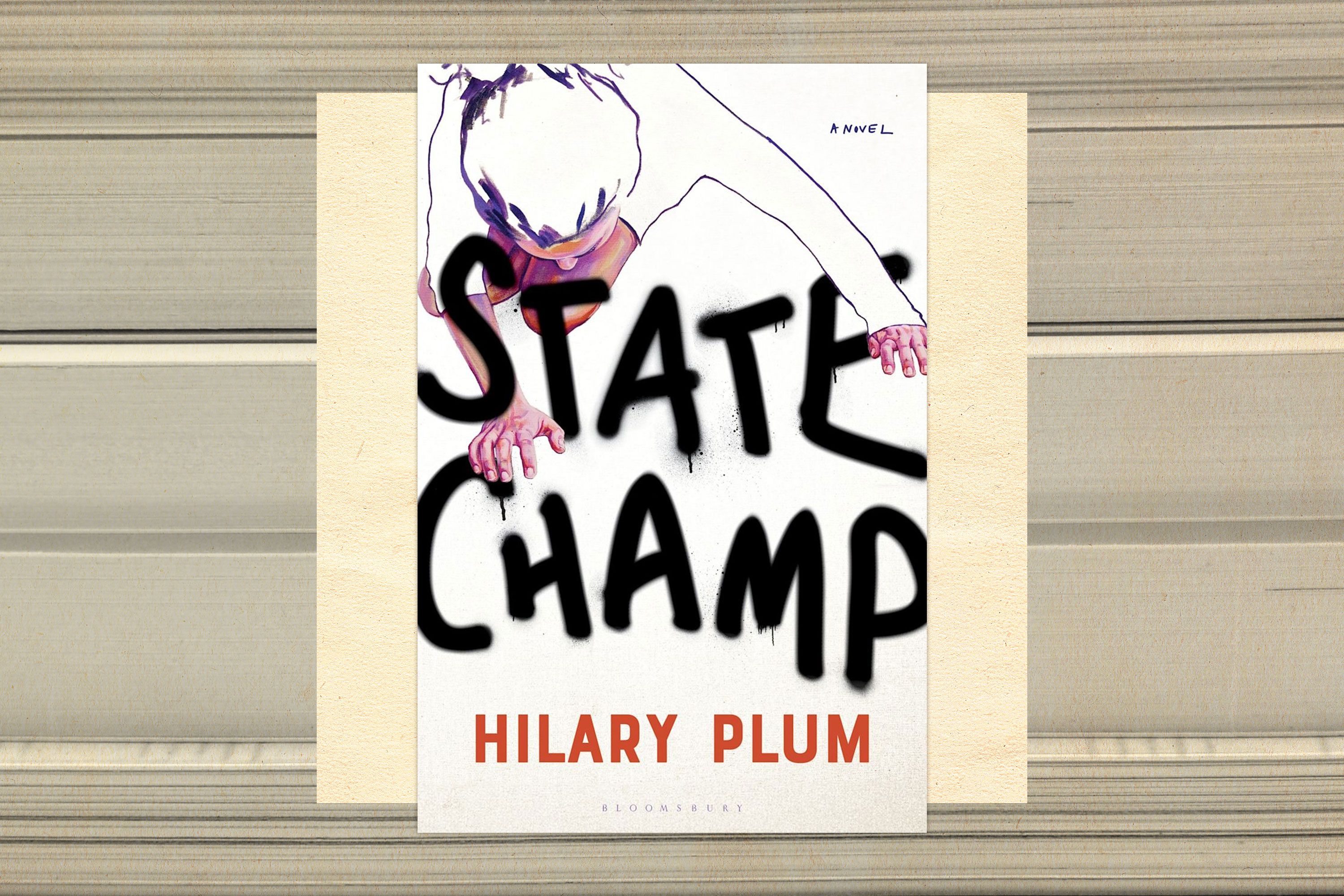
Don’t Miss State Champ New York Magazine staffer Emma Alpern on what makes Hilary Plum’s new novel impossible to put down. |
Photo-illustration: by The Cut; Photo: Retailer |
When you’re telling a story that doubles as an argument for human rights, it must be tempting to cast the scene with ideal players. The tough but compassionate abortion doctor. The desperate patient who arrives at the clinic with a convincing set of reasons for ending her pregnancy. The counterprotester who’s brave and articulate enough to shout down the people who stand outside yelling. The ethical reporter there to chronicle it all.
Hilary Plum’s new novel, State Champ, is definitely arguing for something, but its characters don’t always seem up to the task of effecting change. Rather than being aligned in their beliefs, they’re scattered, ambivalent, at odds. That’s part of what makes the book so interesting. I sat down thinking I’d read the first 20 or 30 pages and ended up finishing it in a single sitting. It’s narrated by Angela, the receptionist at a women’s health clinic in an unnamed U.S. state. Not long before the story begins, the clinic’s doctor is arrested and sentenced to 12 years in prison; she was in violation of a draconian new heartbeat law. Angela has returned to the boarded-up facility to go on a hunger strike, a process she details in letters written to an ex-hookup of hers named John who works for a local newspaper.
But Angela wasn’t a well-liked employee, and she isn’t especially clear about her reasons for being there. John doesn’t want to write about her stunt, not that he’s a particularly good journalist anyway. (“Do you even read the paper I write for?” he says at one point. “Where ads for colon cleansers pop up after every sentence and every article is only like 6 sentences long?”) The clinic’s physician, Dr. M, doesn’t have much in the way of bedside manner — at least not with her receptionist, toward whom she is openly antagonistic. “In my heart you are fired,” Angela remembers her boss saying after she makes a minor scene in front of some potential donors. And the book itself is as much a comedy as it is a polemic, defined by Angela’s prickly, joking voice.
In a different sort of story, Angela’s protest would open up some rapport between the two women, but Dr. M, whose release she is demanding, isn’t flattered when she hears about the hunger strike. “She said to thank you, but she said it’s not necessary,” says another doctor who comes to check on Angela after her story is picked up for a couple of half-hearted local-news reports. Nor does it appear likely that Angela’s demand will be met, as people (her aunt, a protester, the journalists she talks to) keep reminding her. But that doesn’t seem to be the point. “Not everyone needs hope. It doesn’t seem like you do,” that same doctor says. As she did when she was a high-school track star, Angela is capable of shrugging off pain and discomfort so she can keep trudging forward.
State Champ is a post-Dobbs novel we’re lucky to have, one that really wrestles with the place of abortion in an imperfect world. When an Instagram-ready anti-abortion protester named Janine shows up at the clinic, Angela accuses her of not living in the real world, the one where bodies get away from us, do things we don’t want them to do. It’s not the kind of book where someone like Angela has a chance at convincing someone like Janine. But it lets her try. —Emma Alpern, New York Magazine senior copy editor
|
|
|
Consider Yourself Kissed Is Your New Best Friend in Novel Form I talked with Jessica Stanley about how her husband took over the laundry and she wrote a cozy yet realistic romance in a year. |
You know those novels, the ones you reread every few years, that feel like having a cozy cup of tea with a very witty and fascinating old friend? Like I Capture the Castle or The Pursuit of Love? Jessica Stanley has written one of those books with Consider Yourself Kissed, which is already a hit in her native Australia and her current home, the U.K. It spans ten years in the life of Coralie, an Australian copywriter new to London, and Adam, the political reporter she falls in love with after rescuing his daughter from a dip in a duck pond. The relationship at the heart of this book survives challenges like births, deaths, Brexit and COVID. Coralie and Adam are immediately convincing and relatable thanks to the way they communicate, which is the way actual people in love do: sometimes via deep thoughts and good jokes, sometimes via texts about scheduling children’s weekend activities — sometimes both at the same time.
I am lucky that Jess is one of my good friends, though our relationship is weird in that we’ve communicated nearly every day for over a decade in spite of having only met twice IRL. She lives in London and we are on a longstanding WhatsApp group called “Novelist Moms” along with fellow writer-mother Meaghan O’Connell. The three of us met via the gentler, weirder internet of the early 2010s and kept in touch through, collectively, the births of seven children and the publication of four books. It’s hard to pick a favorite child of the seven but I think we’d all agree that Consider Yourself Kissed is the best book Novelist Moms has produced so far. We talked a few weeks ago after Jess had just returned home from launching the book in Australia.
How did you write a book where two people convincingly fall in love, then stay in love without being sappy or creepy or cliché at all? When you're trying to get love down on the page, what are you keeping in mind?
I think for me, the most important thing is the rhythms of speech. How you are listened to and how you listen to the other person, especially how you are funny together and how you're speaking to each other on one level, communicating, but then what's going on underneath all of that stuff. It was like just making music out of two people. It's hard for me to write descriptions, really, but when two people are talking, I could go on forever. I just like that so much. Did you know at the outset that this was what you were setting out to write?
I didn't. I don't even know if I've told you this story, but in 2020 I wrote to Jonathan Franzen — this really, really intense, and in retrospect, maybe hypomanic, email about how much I love The Corrections. I woke up one morning at 4 a.m. — that's always a bad sign mental-health-wise — and was full of just thinking about The Corrections and the huge role that it played for me. I'm thinking about things like how one of the characters has bacterial breath, and I still always think about that.
And so I wrote to Jonathan Franzen and said how much I love the book. I don't know how long it took, but he actually wrote back and — I think maybe because my praise had been so specific — he was really taken with it and was sort of reminiscing about how he first discovered bacterial breath and stuff like that. And then we corresponded for a bit, but then life took over. It was during COVID. But toward the end of the correspondence, he said, "And when A Great Hope” — my first book, which I was working on at the time — “comes out, get Picador to send me one." And I was like, "Okay." And I sent that on to my editor at the time, but I didn't think that it would really happen.
But then they remembered and sent it. I don't think I even necessarily knew that they had, but out of nowhere, I got an email from him saying all sorts of really nice things about A Great Hope. Really amazing, lovely things, which really helped me deal with the fact that hardly anyone had read it in Australia, and that it hadn't sold anywhere else outside Australia, so not in the U.K., and certainly not in the U.S. But one of the things he said in the email was that he thought that I should learn to stay in scene. Start a scene and stay in it, instead of cutting away to a flashback, a memory, some backstory.
And at the beginning of writing Consider Yourself Kissed, I was like, "I just want to do a love story and I have to learn to stay in scene." It was like an experiment: Can I start from the start and go all the way to the end? Not just start the start of the scene and go to the end of the scene but start the start of the story and go all the way as far as I possibly could. So in this case, ten years.
The couple in this book, Coralie and Adam, aimed to have an equal partnership, but somehow his career ends up taking precedence over hers. And that was the detail that the reviewer in The Guardian really focused on. She wrote, "I have long noticed that in a house with one spare room and a heterosexual couple who both work from home, the spare room is where he works with a door that shuts and perhaps even a designated desk. And she works somewhere else, always for good reasons, but always."
Is that literally true in your house? I know at one point you had a work shed in the backyard. I've moved house now and Jude works in half of the sitting room. And I work in a top-floor bedroom because I make all the kids sleep in the same room. And that's only going to work … Until your oldest child decides that she wants her own room. Yeah, so I'm living on borrowed time.
Could you build another shed or that's not really it?
To be real, I didn't enjoy the experience of the shed because I'm always having to come in to get my tea, and then when you've had a tea, you have to come in to go to the bathroom. And once, when I was writing my first book in there, I left the door unlocked overnight and someone stole all the Christmas presents. And another time I left it unlocked and a fox came in and took a shit on my draft that I had printed out at the copy shop. It didn't feel like a safe space. So I'm unwilling to try that again.
Workplaces aside, I think that specter of male precedence hovers over almost all the heterosexual partnerships that I know of. And in the book, Coralie wonders how the world can be made fair when two people who love each other can't even manage it. Do you feel like you're closer to being able to answer her question now?
This is my main theoretical preoccupation: How can humans, who are a mess, ever get anything done or ever make anything better? Maybe if I was pushed to answer, I would say it's something about childhood that if everyone could just be loved when they were young, we'd all be happy and better. But every certainty I thought I had about politics and what is good and bad politically I've had to get rid of because things are just going so badly and I don't know what to do about it.
Some people ask me how I managed to write this book in one year when my other book took me eight years, as you know. I truly think one of the main reasons is that in 2020 Jude took over the laundry and he does the laundry now. He always did the dishwasher and cleaned the kitchen. But that was fine because I cooked and shopped. But then he also took on the laundry, which is such a big job for a family of five. And that has made an enormous difference in my day-to-day life. So often when people ask me — especially women, and especially women with young children — "How on earth did you manage?," that is what I tell them.
|
|
|
Subscribe now to get unlimited access to everything New York, including subscriber-only newsletters, exclusive perks, the New York app, and more. |
|
|
Glennon Doyle Got Softly Bullied Off Substack Her dissenters seemed to think she was too big to be on the platform, whatever that means. |
Last month, inspirational media personality Glennon Doyle, most recently the author of We Can Do Hard Things and pioneer of the trend of divorcing your husband and marrying a woman, announced that she had joined Substack in a video chat with novelist/memoirist/all-around good time Elizabeth Gilbert. In the video, hosted on Gilbert’s Substack Letters From Love, Gilbert describes encouraging Doyle to join the platform: “Come over to Substack where the kind people are … come over to the Substack and be with us in the gentle corner of the world.” Gilbert may have oversold Substack’s kindness, it turned out. Less than a week later, Doyle had deleted all her letters and left the platform.
The problem seems to be that many Substack users persist in believing that the newsletter app is exclusively a little incubator for creativity and experimentation, choosing to ignore the fact that it is also a for-profit social-media platform that thrives on user engagement. Many dissenters couched their dismay at Doyle’s decision to move from an unpaid newsletter to a paywalled one in the language of self-help and empowerment. They doubted their own motives and fought against their own “scarcity mind-set” even as they reported, with unsparing honesty, their gut reactions to Doyle’s presence on Substack. It just felt wrong. “When you announced your arrival on Substack — ‘I’m here! A new community is born!’ — I felt an ache of disappointment. It wasn’t anger or resentment, but a sadness I couldn’t immediately name,” wrote one fan in an “open letter” to Doyle. “I surprised myself by how disruptive it felt in my body to see Glennon hop on the Substack train,” another Substacker wrote in a since-deleted Note. Even best-selling Quit Like a Woman author Holly Whitaker wrestled with her feelings about Doyle’s Substack on her own Substack, Recovering: “My whole fucking weekend was spent out of my body, in my head, writing essays reacting to Glennon Doyle’s coming to Substack, a thing …that I can only equate to a Starbucks moving in next to your little mom-and-pop coffee shop that was already hanging on by a fucking thread.” In other words, people felt like Glennon Doyle was too big to be on Substack. Even if they liked Starbucks in general, they didn’t want a Starbucks on “their” block.
Writing to subscribers of her original, free newsletter, A Little Treat, Doyle explained her abrupt exit. “I finally love myself (and us) too much to stay in any situation that feels bad. It is okay to try a new thing and then say: actually, that did not work either.” She went on to describe her decision to leave as "embodiment progress” and said that all subscription money would be refunded.
After Doyle’s flounce, some Substackers pivoted to defend her. Several newsletterers wrote about how misogynistic, unfair, and arbitrary it was that Doyle felt she had to leave the platform, most notably author Kate Manne (17K-plus followers): “It’s a lesson and a warning about what will happen to more or less any woman who asks for too much, relative to patriarchal norms and expectations — especially in close-knit communities where people can be pounced on.”
We can choose to learn a lot of different lessons from this minor kerfluffle, but my personal takeaway is some free advice for Substack: If it wants to continue to recruit big names onto its platform, it should invest in coaching them in advance on how to read their respective rooms, and encourage them to, à la Lena Dunham, offer solely unpaywalled posts at first. Right now, the top-25 “literary” Substacks include three about how to make more money doing Substack and one Lithuanian political journalist. If Substack wants that list to skew more George Saunders and less MLM, it should invest in ushering its stars onto the platform more thoughtfully to avoid scrapes like Doyle’s in the future.
|
|
|
Stop What You’re Doing and Read The Murderbot Diaries Right Now The TV show is good. The books are even better. |
Welcome to The Dragon’s Den, a section of this newsletter where we absolutely refuse to talk about realism, and instead consider books that have dragons in them. (Wizards, spaceships, distant planets, time travel, vampires, gods trapped in the body of a human and sent down to Earth to carry out a task they can only distantly recall but are driven to perform, werewolves, and elves also acceptable.) |
This month Apple TV+ has begun releasing its new science-fiction comedy series Murderbot, a show that is pretty good! Not perfect. Great use of Alexander Skarsgård! Uneven application of other things. More to the point, though, Murderbot is an adaptation of a series of novellas and novels by Martha Wells, and although Murderbot the TV show is a light, quaffable comedy, the Murderbot books fucking rip. For the sort of reader who even skims a section called “Dragon’s Den” with mild-to-moderate interest, it is highly worth throwing a few of those bad boys on the summer-reading pile.
The first in The Murderbot Diaries is called All Systems Red, and I strongly recommend starting there even if you’ve already seen the TV series, which will basically cover those same events. (The premise, roughly: A cyborg designed to violently protect corporate property has hacked its governor module and learned to question both humanity and its own identity by bingeing thousands of hours of terrible TV.) So much of the appeal of the book series is in Murderbot’s voice-y first-person narration, and it will be worth experiencing how darkly funny it is inside Murderbot’s own mind, and how different the human characters are when seen through its point of view rather than as goofy sitcom dudes. All Systems Red and the next three books are novella length, and if the first one does it for you it’s worth committing to the whole quartet (All Systems, Artificial Condition, Rogue Protocol, Exit Strategy) — they’re all pointing toward one big, satisfying conclusion, and it’s not until book two that you get to meet ART, Murderbot’s best friend/spaceship. After that, the novel-length installment in the series is also fun but I don’t need to recommend it especially; either you will be in for the long haul or you’ll have had a good time and be ready to move on. I enjoyed every one of them, although I find some of the more action-y sequences get a little wearisome in the longer works. The most important note is that Fugitive Telemetry is really an ephemeral detective novella, which infuriated me. One short installment of Murderbot Sherlock Holmes? It’s cruel. —Kathryn VanArendonk, features writer, Vulture
|
|
|
The May Releases You Should Buy, Skip, or Put on Hold at the Library |
Happiness Forever, by Adelaide Faith
Sylvie is obsessed with her therapist. The time that passes between their weekly sessions, besides the hours Sylvie spends working as a veterinary nurse, is almost impossible to endure, leavened only by fantasies of stroking the therapist’s hair and holding her hand. The therapist has her work cut out for her: Sylvie’s parents are dead, her first love OD’d on heroin, and she’s lost years to drinking and an abusive relationship. But as the sessions continue, and as Faith immerses us hypnotically in Sylvie’s consciousness, we witness a transformation unfolding. Is the therapy … working? With great subtlety, Faith creates a tragicomic portrait of a mind in the process of healing: No small feat. Buy — Emily Gould
The Stalker, by Paula Bomer
Doughty, as Robert Doughten Savile is known, is a cold-blooded sociopath who especially enjoys torturing and taking advantage of vulnerable women. Sounds like it wouldn’t be fun to be stuck in his head for the duration of a novel? Well, it somehow is, thanks to Bomer’s narrative minimalism, eye for detail, and uniquely twisted ability to find humor in the darkest places. As Doughty traverses 1990s New York — doing sex work for quick cash in Grand Central, smoking crack in Tompkins Square Park, tormenting a bartender named Beata, and insinuating himself into the life of a doomed alcoholic book editor with a sweet Soho loft — we’re keenly aware that his baseline idiocy will eventually trip up his scheming. When it finally does, his comeuppance is cathartic, glorious, and almost too viscerally disturbing to read. But read it you must. Buy —E.G.
Allegro Pastel, by Leif Randt
A best seller in Germany, where it was originally published in 2020, Randt’s novel follows the long-distance on-and-off relationship between Tanja, a big-time novelist in Berlin, and Jerome, a website developer living in a small town near Frankfurt. While the book is often funny, its plot also felt aimless, cycling through a series of in-person visits where the two aloof creatives eat döners, go to clubs, and occasionally take ecstasy. But it’s worth reading if only for its final chapter, an email from Tanja to Jerome that I found surprisingly profound. Library hold. —Katja Vujić, writer, the Cut
|
|
|
-
The first episode of Simon & Schuster’s Bookstore Blitz stars Anna Marie Tendler. She buys her own book, which should not be allowed. The game should have more rules, in general. Also the budget should be higher. If Sean Manning would like further feedback, we have more thoughts!
- A handful of self-published authors have been called out for leaving ChatGPT prompts in their published books. Whoops!
-
Alissa Bennett did not find much to admire in Sarah Hoover’s The Motherload.
- In the words of editor-at-large Erik Maza: “An Alan Hollinghurst byline in the London Review of Books? Reviewing a two-volume history of gay life in mid-century London? Try and hold me back.”
-
The latest BookTok drama has me wondering if every big genre book is going to be Rebecca Yarros fanfic for the foreseeable future.
- Miranda July is launching the paperback edition of All Fours at Pioneer Works this Thursday. But good luck getting in if you don’t have a ticket already — we’re told there are hundreds of people on the wait list.
|
|
|
|
Join us for a lively evening newsletter about everything that just happened. Sign up to get it every weeknight. |
|
|
https://linkst.thecut.com/oc/673755c289ce835004029572nu84c.115h/019ef8ad
|
|
|
|